
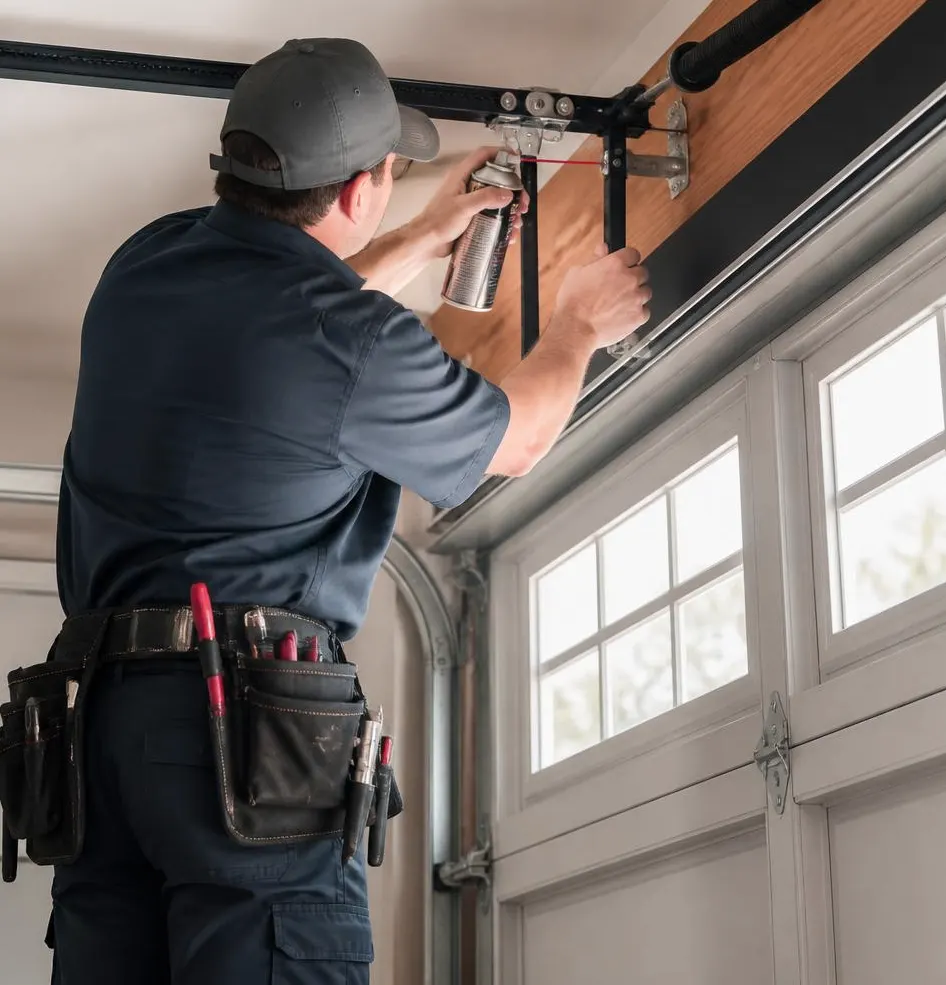
Short answer: if your garage door bangs, jerks, or grinds on its way up or down, it's almost never the opener's fault. It's the rollers and cables — the small, unglamorous parts that quietly wear out until they can't hide it anymore. If you and your spouse are arguing about whether this is a "$40 fix" or a "call someone now" problem, here's how to tell.
What Rollers Actually Do (and Why They Fail)
The rollers are the small wheels that ride inside the metal tracks on either side of your door. Every time the door opens or closes, they're taking the full weight of the panels, over and over. Nylon rollers are quieter but wear down over years; steel rollers with bearings last longer but squeal when the lubrication dries out.
In this part of Orange County, dry season dust is the roller's real enemy. Fine grit works its way into the roller stems and bearings, especially on doors that face a street with regular traffic or sit near a driveway that collects dust during the long dry stretch before winter rain. That grit grinds down the roller's edge, which is why a door that used to glide now sounds like a shopping cart with a bad wheel.
Worn rollers show up as:
- A grinding or rattling sound concentrated at one point in the door's travel, not the whole way up or down
- The door seeming to "catch" or jump slightly in the track
- Visible wobble in a panel as it passes a certain height
- Flat spots or chips you can see on the roller wheel itself if you look closely
Worn rollers alone won't strand your car in the garage. They're annoying, not dangerous. That's an important distinction for the argument you're having.
What Cables Actually Do (and Why This One Matters More)
The cables are a different story. They run alongside the springs and are what physically hold the door's weight when it's not fully closed. If a cable frays and lets go while the door is up, the door doesn't ease down — it drops, hard, with the full weight of the panels. That's a real safety issue, not a noise complaint.
Frayed cable warning signs:
- Visible fraying, kinks, or rust at the drum (the spool near the top corners where the cable winds)
- The door hanging unevenly, with one side noticeably lower than the other
- A popping or snapping sound during operation
- Loose cable with visible slack when the door is closed
Cables don't usually fail out of nowhere. They wear gradually from the same cycle count and the same dry grit that wears out rollers, and sometimes from a weakened spring putting uneven tension on one side. Homes with older torsion spring setups that haven't had any attention in years are the most common candidates. If a cable looks frayed anywhere along its length, that door shouldn't be used until it's replaced — not "use it carefully," actually don't use it.
The Weather Connection Nobody Thinks About
This area runs through real seasonal swings: dry, dusty stretches followed by winter rain, plus the heat inland neighborhoods get compared to areas closer to the coast. Hardware doesn't love that back-and-forth. Dry months bake out lubricant and let dust settle into moving parts; rainy months bring humidity that can start light surface rust on cable ends and drums, especially in garages that aren't fully sealed. A door that's been fine all summer can suddenly sound rough the first week it gets damp, because the dried-out grit and the new moisture combine at the worst possible moment — right as the rollers and cable are already stressed from months of dry wear.
What You Can Check Yourself
- Pull the disconnect and move the door by hand (with it fully down first) — resistance or grinding tells you where the problem is
- Look at the cables near the bottom brackets and up at the drums for fraying or rust
- Listen for whether the noise happens at the same spot in the track every time
- Never touch a spring yourself — that part is not a DIY fix, regardless of how confident you feel
When to Call Placentia Garage Door
If you see any fraying on a cable, the door is hanging crooked, or it's making a grinding sound that's gotten worse over the past few weeks, that's the point to stop troubleshooting and call. Placentia Garage Door can inspect the cables, rollers, and spring tension together, since a problem in one usually means stress on the others. Worn rollers typically get replaced as part of a standard tune-up through our Garage Door Maintenance service, while frayed or snapped cables are handled alongside Spring Replacement, since both systems share the load and should be balanced at the same time. If the door drops or won't move at all, our Emergency Garage Door Service covers that same-day.
So — spouse settled? Loud and annoying is a maintenance call. Frayed and uneven is a today call. If you're in Placentia, Yorba Linda, Fullerton, Brea, Anaheim Hills, Orange, Villa Park, or Atwood and you're not sure which one you've got, reach out to Placentia Garage Door and we'll tell you straight, then fix it right.